








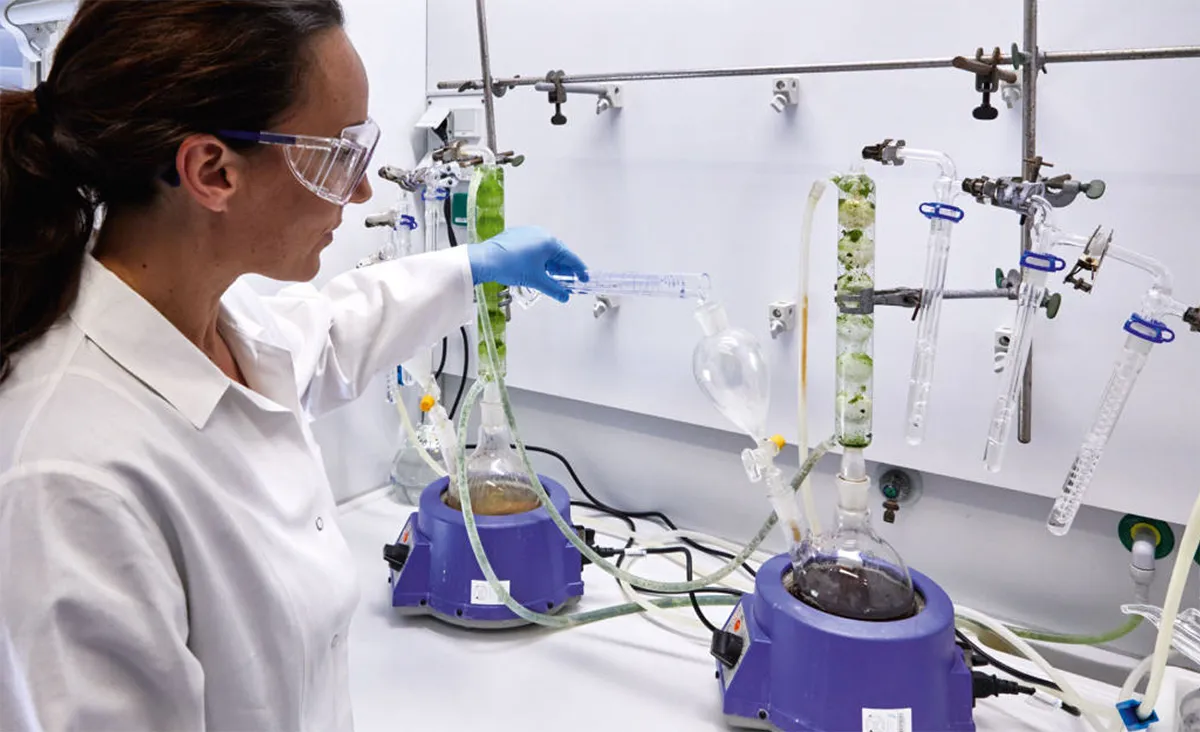
75 per cent of the participating laboratories passed the latest QS laboratory performance assessment for residue monitoring. The results are therefore generally weaker than in many tests in previous years. The main reason is likely to be the chosen matrix – avocado – which, due to its high fat content, places particular requirements on residue analysis.
A total of 93 laboratories from 17 countries took part in the QS laboratory performance assessment 2026/1, including 82 laboratories accredited under the QS scheme. 75 per cent of all participants passed the assessment successfully. Of the accredited laboratories, 16 were unable to meet the assessment requirements.
Despite the high analytical requirements, numerous participants achieved very good results: 48 laboratories (52 per cent) correctly identified all active substances and quantified them without error. These included 47 recognised laboratories.
Avocado as an analytical challenge
The avocado matrix was deliberately chosen as a sample that is considered challenging in the analysis of plant protection product residues. With its high fat content of typically 15 to 30 per cent, it differs significantly from many other plant-based foods and places particular requirements on sample preparation, extraction and quantification.
At the same time, the commercial importance of avocados has increased considerably in recent years. Imports into Germany have increased approximately fivefold over the past ten years. The aim of the test design was to verify whether the participating laboratories could reliably manage both the challenges posed by high-fat matrices and the extraction of polar active substances.
Errors primarily in quantification
Problems arose during the analysis, particularly with highly lipophilic active substances. In some cases, the laboratories failed to detect active substances even though they were included in the laboratories’ stated scope of analysis.
However, the majority of the nonconformities were due to quantification errors. These occurred primarily in the low concentration range between 0.03 and 0.06 mg/kg. Fosetyl-Al also presented increased analytical requirements. Due to its high polarity, this active substance poses particular requirements in terms of extraction, recovery and quantification.
The fact that the chosen matrix was nevertheless manageable is demonstrated by the results from the 48 laboratories that completed the test without error.


