








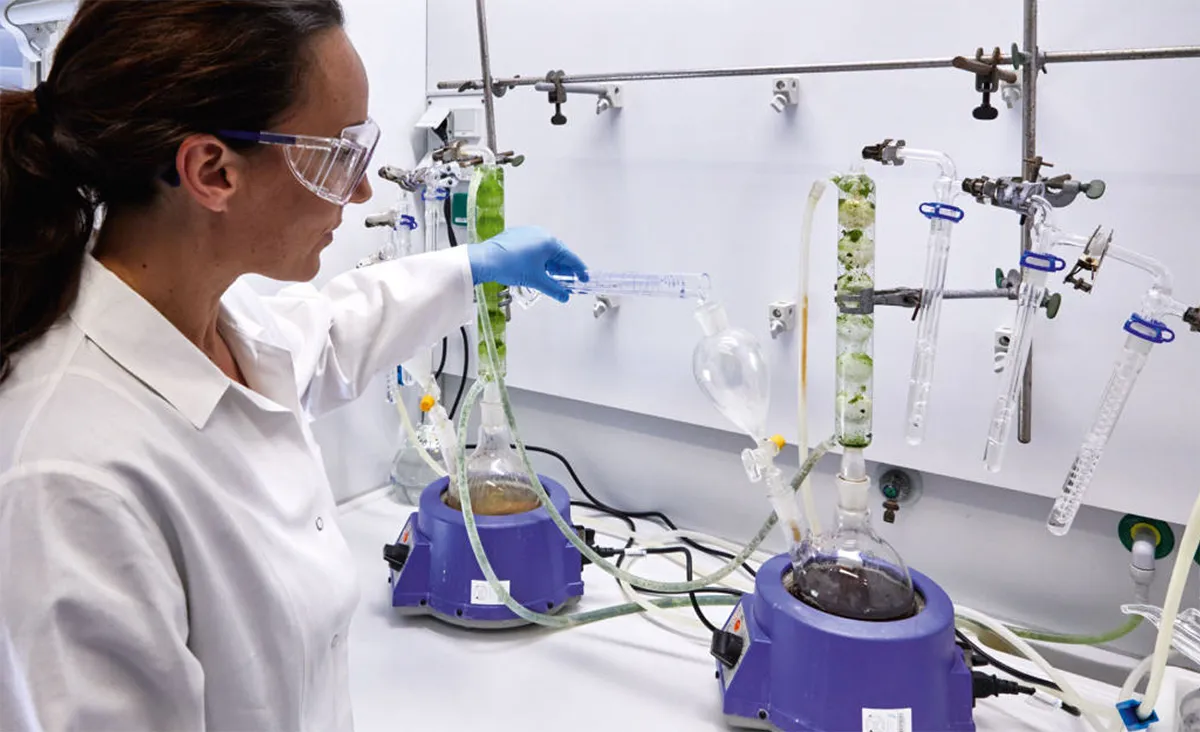
As part of the second QS laboratory performance assessment in 2025, 56 laboratories from 18 countries took on the analytical challenge in the eggplant test matrix. As in previous tests, this test once again demonstrated the importance of regular proficiency testing for reliable residue analysis in the QS scheme.
Broad field of participants with stable overall performance
Of the participating laboratories, 42 were QS recognized
laboratories. Five of these recognized laboratories did not pass the test.
A further 11 laboratories are in the recognition procedure, and three participated as third-party laboratories.
· Six of these laboratories did not meet the requirements for passing.
· One laboratory did not submit any results.
Twenty-six laboratories (46%) proved that the task set was generally easy to master. They correctly identified and quantified all active substances, thus achieving the maximum score of +2. Among these were 24 QS recognized laboratories.
Sophisticated test design with new analytical challenges
This time, QS sent eggplant as the test material. This matrix presents a moderately challenging degree of difficulty. The purple skin of the eggplant is particularly rich in secondary plant compounds such as anthocyanins and phenolic acid, which can cause significant matrix effects. Two slightly different test materials were used for the test:
- Test material A with 8 active substances plus single method active substance
- Test material C with 9 active substances plus single method active substance
A total of 11 active substances were tested in both test materials, including four active substances that were examined for the first time in a QS laboratory performance assessment: proquinazid, mepronil, benthiavalicarb-isopropyl, and furathiocarb (metabolite from the residue definition of carbofuran).
The test thus continues the practice of regularly including new and previously untested active substances in combination with changing matrices in order to test the analytical competence of laboratories even in less common active substance-matrix combinations.
Conclusion: Good results – but clearly room for improvement
80% of laboratories passed the test. Although the overall result is good, it is somewhat weaker than other tests conducted in recent years.
Particularly noteworthy are:
- Two of the four active substances tested for the first time (mepronil, furathiocarb) proved to be particularly challenging from an analytical perspective.
- The analysis of metabolites for monitoring complex residue definitions remains a challenging sticking point in laboratory practice.


